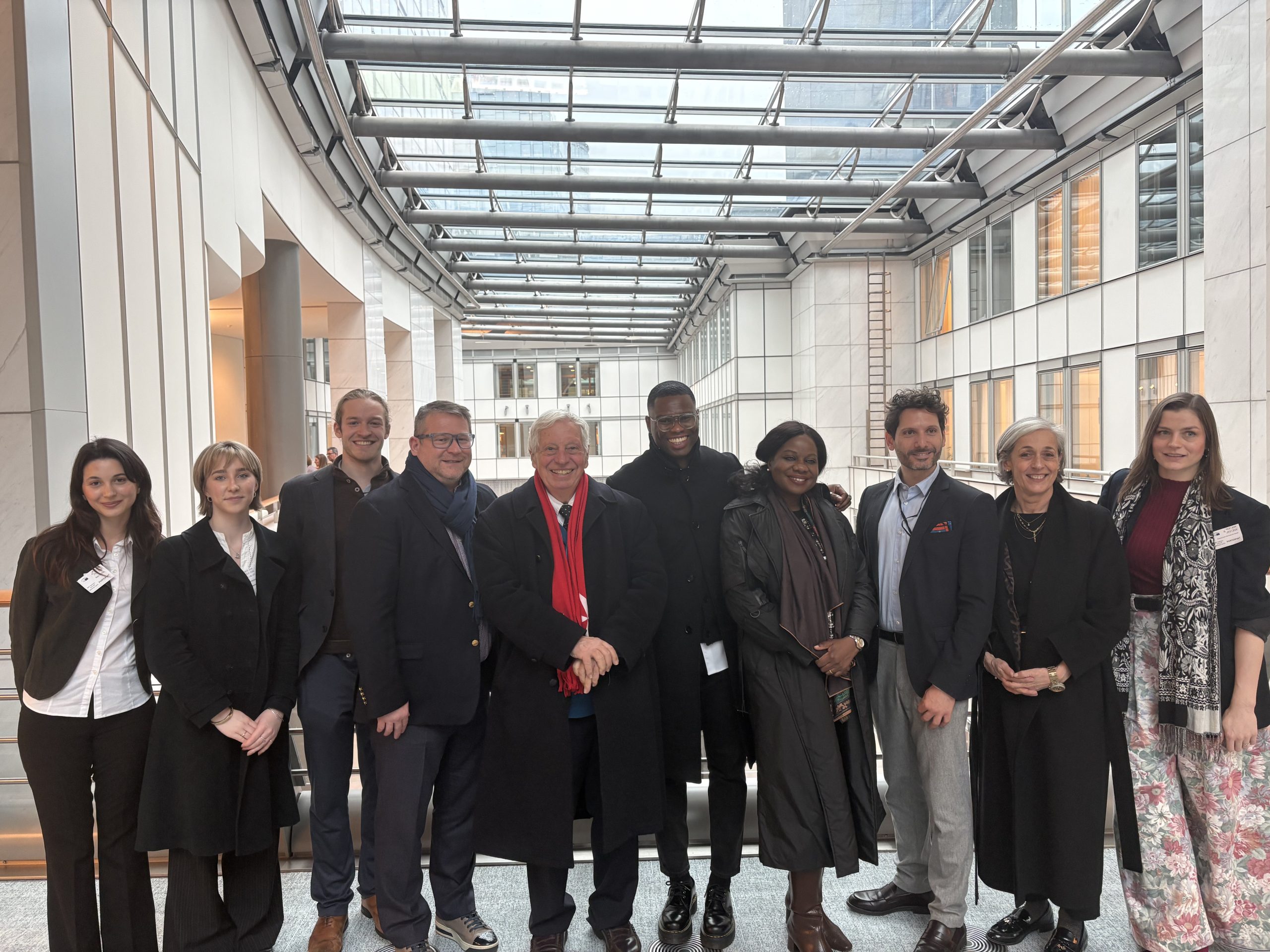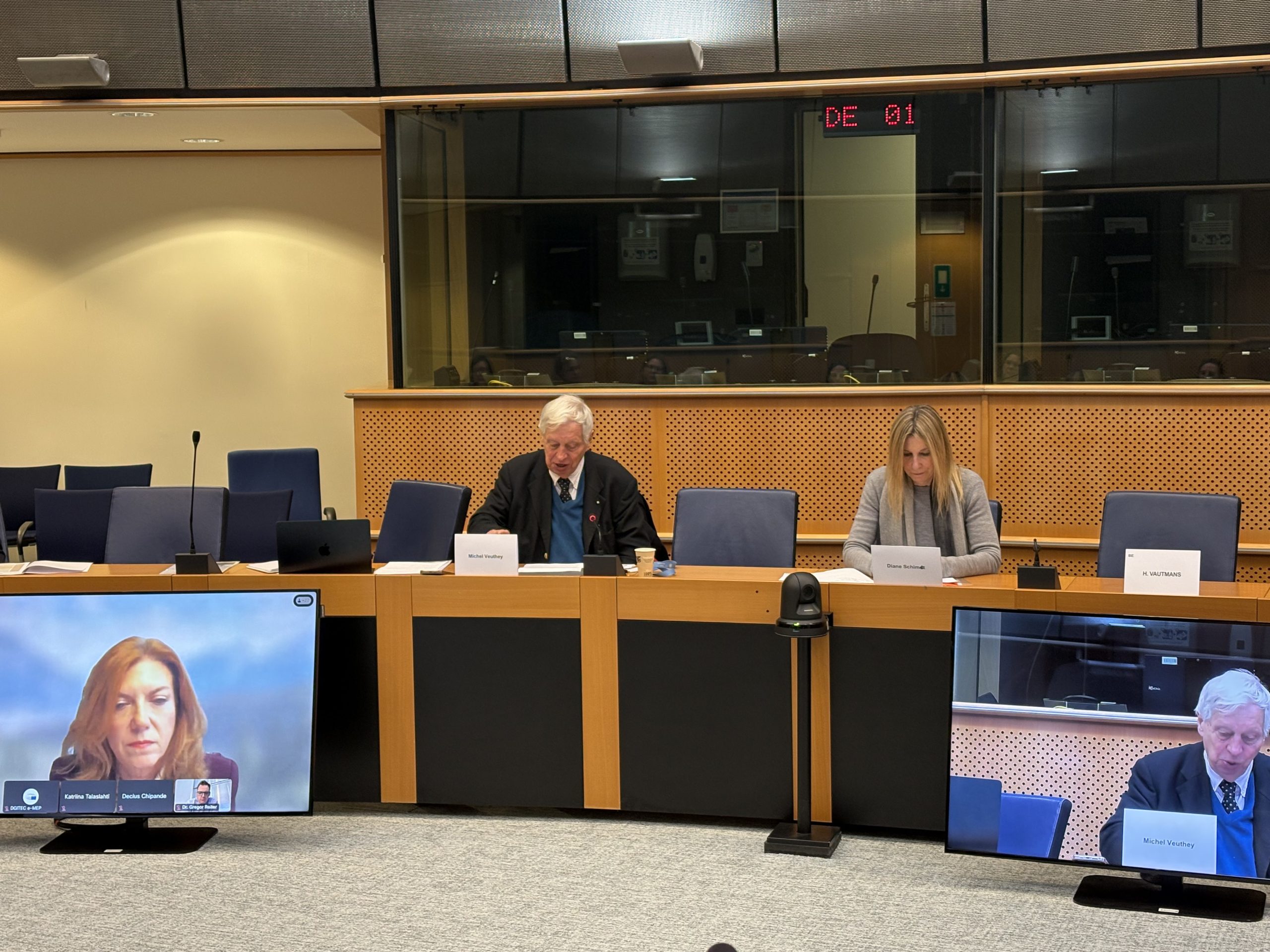
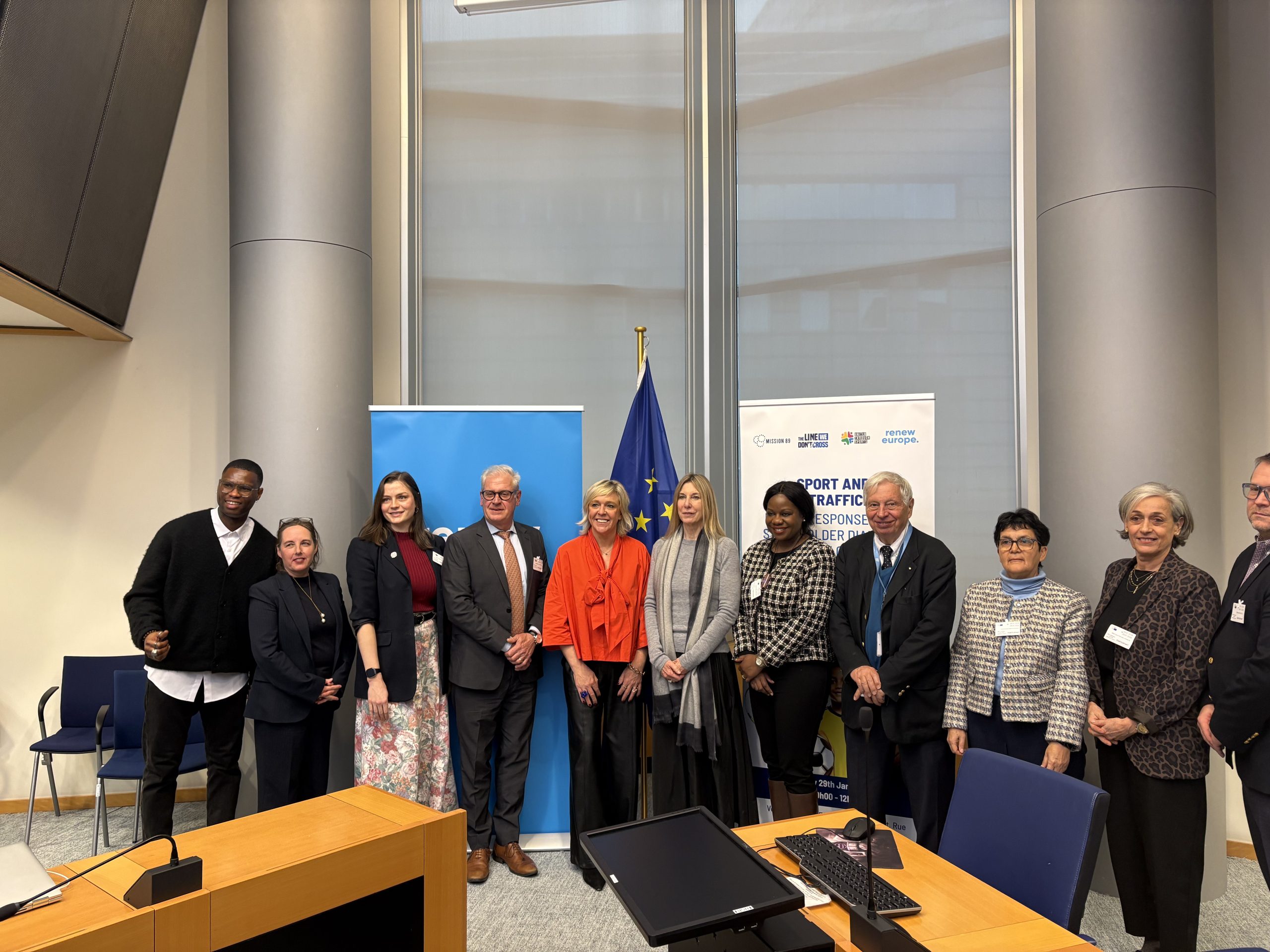
On 29 January 2026, Ambassador Michel Veuthey was invited as a panelist to a roundtable on ending child trafficking in sports, held at the European Parliament in Brussels. The event was organized by Mission 89 and hosted by MEP Hilde Vautmans from the Renew Europe Group.
The roundtable brought together representatives from European institutions (European Commission, European Parliament, and Council of Europe), regional organizations (African Union), sports institutions (FIFA), associations, and professional athletes.
Introducing the panel, MEP Hilde Vautmans, Vice-Chair of the InterGroup on Children’s Rights, reiterated her commitment to protecting children in sports, especially as the EU is currently reviewing its anti-trafficking strategy, which is expected to include specific measures for the sports sector. She pledged her support for initiatives aimed at improving the protection and prevention of child trafficking in sports.
Diane Schmitt, EU Anti-Trafficking Coordinator, highlighted that identifying child victims of trafficking remains a major challenge. She also emphasized the difficulties in gathering evidence for prosecutions related to child trafficking and discussed emerging trafficking trends, including the increasing number of trafficked children from Latin American countries. However, she noted that the European Union has a robust framework to combat trafficking. By 16 July 2026, all EU Member States will have transposed these instruments into national law. The new directives (2024/1712) require Member States to collect data on trafficking cases. Additionally, during major sporting events like the Paris 2024 Olympics, mandatory measures are implemented to prevent trafficking. Finally, she underscored that Europe has effective law enforcement agencies, such as EUROPOL and EUROJUST, which are well aware of the challenges at stake.
Continuing the panel, Ms. Petya Nestorova, Executive Secretary of GRETA at the Council of Europe, highlighted the Council of Europe’s commitment to combating trafficking. She noted that international and national law do not clearly define trafficking in the context of sports, and unfortunately, the identification of child victims is currently more a matter of luck than the result of systematic efforts by authorities.
At the Council of Europe level, anti-trafficking measures are included in its conventions. Some countries, such as Portugal, are leading the way by introducing mandatory training for sports personnel to identify trafficking cases. Portugal also requires sports clubs to comply with specific standards when working with children. Finally, she emphasized that the Council of Europe is working on a list of risk factors and indicators to improve detection and prevention.
Next, sports organizations took the floor. Marie-Laure Lemineur, Head of Safeguarding and Child Protection at FIFA, emphasized the importance of regulations to combat trafficking, including licensing for agents, transfer restrictions for young players, and the obligation for clubs to report suspicious activities. She highlighted that FIFA has published an ethical guide on the issue, as well as a diploma program on safeguarding measures for focal points within federations. She also stressed the importance of sanction systems within organizations.
Dr. Decius Chipande, representative of the African Union Sports Council, pointed out that these phenomena are closely linked to migration issues. He noted that only 8 member states of the African Union currently have safeguarding norms, but the African Union is working closely with Mission 89 to promote the adoption of these standards across its member states.
Finally, Mr. Roberto Branco Martins, General Manager of the European Football Agents Association, underscored that agents want to operate in regulated environments. However, sanctioning unlicensed agents remains challenging for FIFA in some cases. He therefore emphasized the need for states to include in their national laws the requirement for agents to be licensed by FIFA.
The panel concluded with testimonies from high-level athletes, as well as associations working directly with child victims of trafficking in sports. There is currently a strong network of associations with which collaboration appears promising to better prevent and protect children from exploitation by malicious agents.
In his intervention, Ambassador Michel Veuthey emphasized the critical role of humanitarian actors in combating child trafficking in sports. He proposed embedding trained professionals within sports environments to identify risks and safeguard young athletes.
The Order of Malta, already active on the ground and present at numerous sporting events through its national associations, such as the Order of Malta France, Ireland, Germany and CISOM in Italy, could amplify these efforts through collaboration with the European Civil Protection and Humanitarian Aid Operations (DG ECHO). The focus lies on prevention, particularly for vulnerable migrant populations.
260122_Speaker Brief_EP Brussels Roundtable – H.E. Prof Veuthey