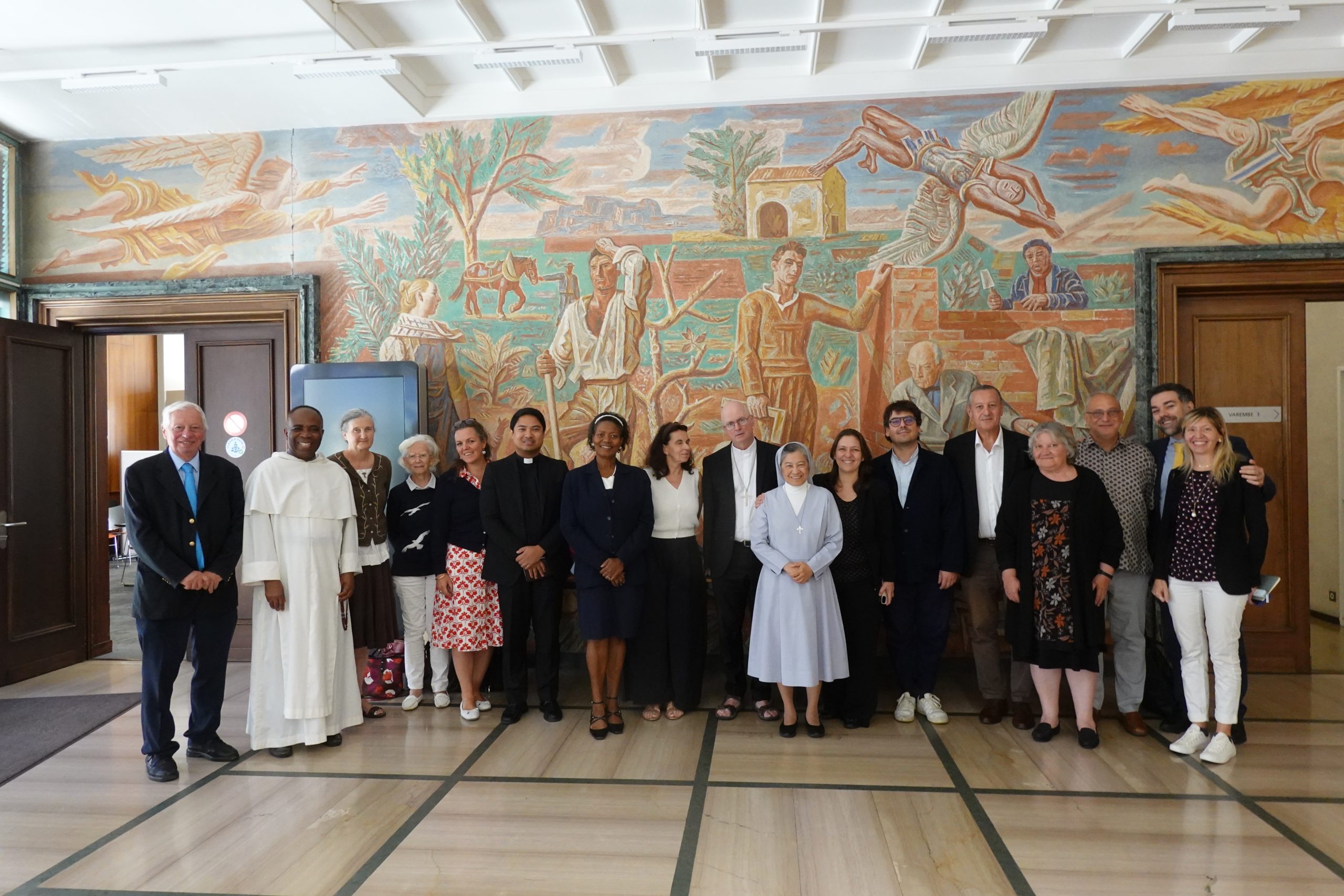
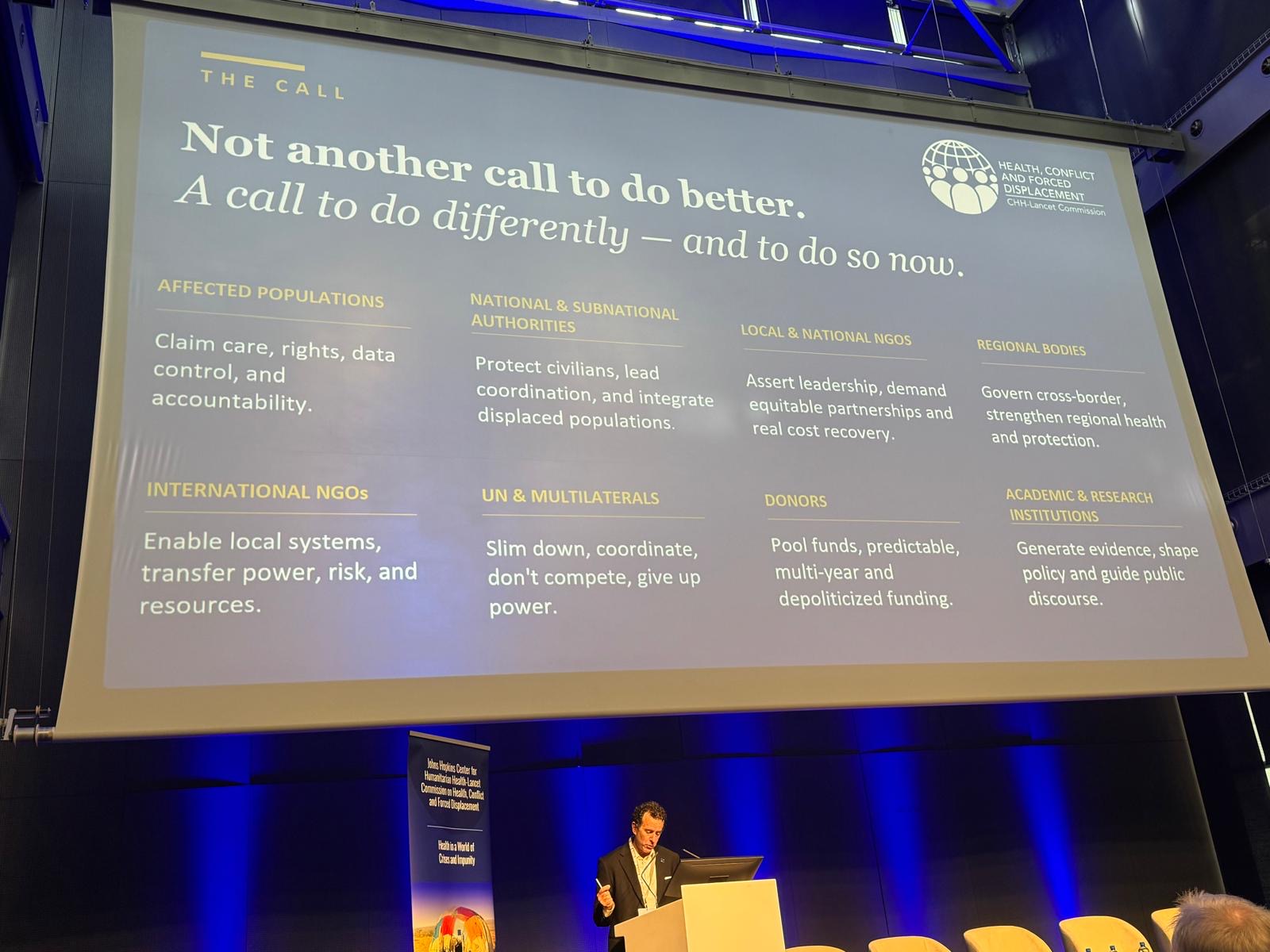
On May 20, Ambassador Veuthey and his Assistants Laura Beorchia, and Cesare Lombardo attended the launch of the CHH–Lancet Commission Report on Health, Conflict, and Forced Displacement at the University of Geneva.
The report, drawing on two and a half years of work, calls for structural reform of the humanitarian system and a new paradigm for humanitarian health response grounded in genuine political strategy. It documents a system in crisis: funding has halved since 2022, leaving 239 million people in need but only 87 million reachable, a gap that could be closed for $23 billion, just 1% of annual global military spending. Attacks on health facilities continue with near-total impunity, forced displacement is at record levels, and humanitarian workers face mounting risks with little support. Duplication and overlaps of institutions further undermine the effective delivery of aid,
compounded by donors’ persistent will to follow their own agenda and failure to understand that investment in one sector produces effects across others.
The report advances four interdependent recommendations for systemic transformation. 1. The first is to invert the power, so that governance, funding, and decision-making shift toward affected communities and locally legitimate actors. International actors currently concentrate over 90% of global humanitarian funding, yet local organisations are often better trusted, more culturally attuned, and more effective. People impacted by crises must become decision-makers, not passive beneficiaries, and external international leadership should be exceptional, time-bound, and conditional. This is inseparable from the broader challenge of localisation and decolonisation, as the humanitarian system carries deep colonial roots and true localisation means transferring not just resources but real decision-making authority.
2. The second is to end impunity, ensuring accountability to affected populations is enforced through law, ethics, and humanitarian principles, and attacks on civilians, health facilities, and humanitarian workers carry real consequences.
3. The third priority is to reform humanitarian financing, ensuring it is needs-based, equitable, flexible, and free from political interference. This requires independent pooled funding mechanisms that decouple aid from donors’ geopolitical interests, alongside direct, long-term funding channelled to local actors.
4. The fourth is to uphold health as a non-negotiable right, for care to be equitable, safe, climate- resilient, and locally anchored, with continuity of care and integration into national health systems as the default, and the protection of health workers and facilities as an absolute priority under international law.
Finally, the report reaffirms humanity and impartiality as absolute and non-negotiable principles, while treating neutrality and independence as contextual tools, useful in certain settings but not universally required. Three further principles, do no harm, solidarity, and accountability, are elevated to core obligations. Critically, neutrality must never be invoked to marginalise local actors or to justify inaction.